Mia Wolf · 4 September 2026
Strategies for Maintaining Search Rankings Following Major Website Infrastructure Changes
Website infrastructure changes such as server migrations, content management system upgrades, or complete redesigns often coincide with shifts in search visibility, yet observers note that structured approaches help preserve rankings when implemented carefully. Research from various digital analytics firms indicates that sites undergoing these updates without proper preparation experience temporary drops in organic traffic, sometimes lasting several weeks, while those following established protocols recover more quickly. Data shows that elements like redirect implementation and crawl accessibility play central roles in how search engines re-evaluate pages after alterations.
Preparation Before Infrastructure Updates Begin
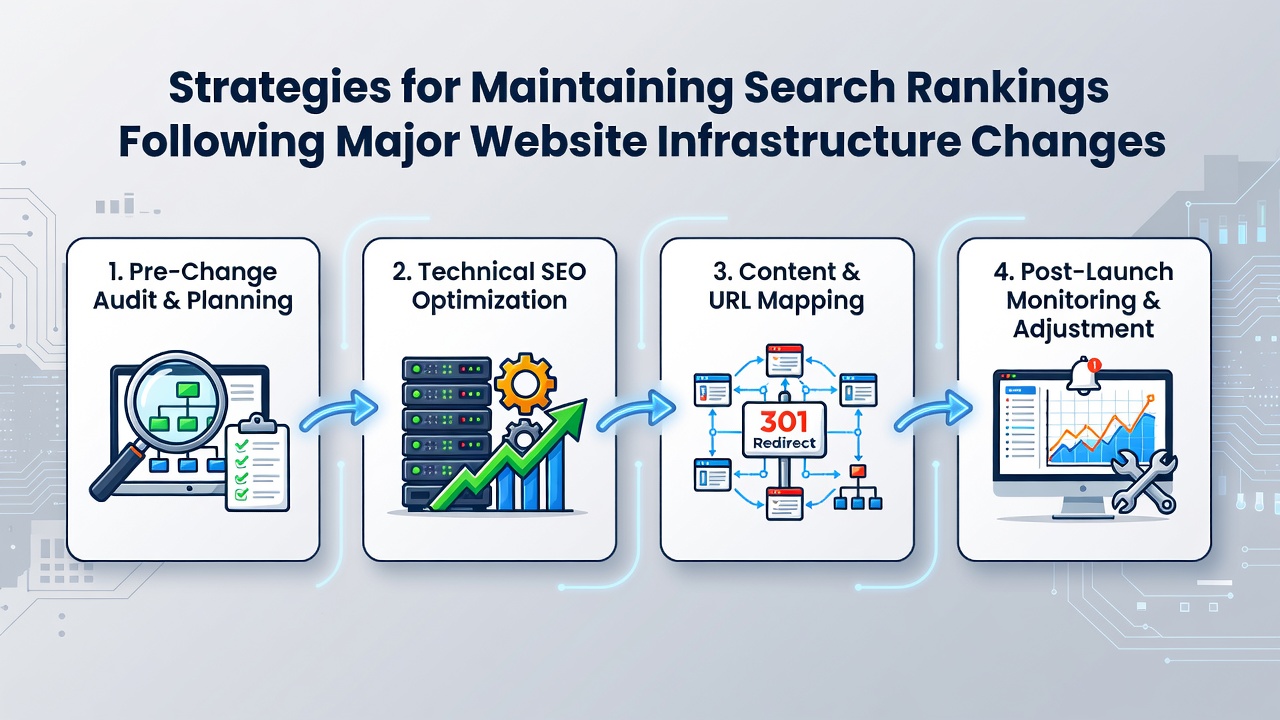
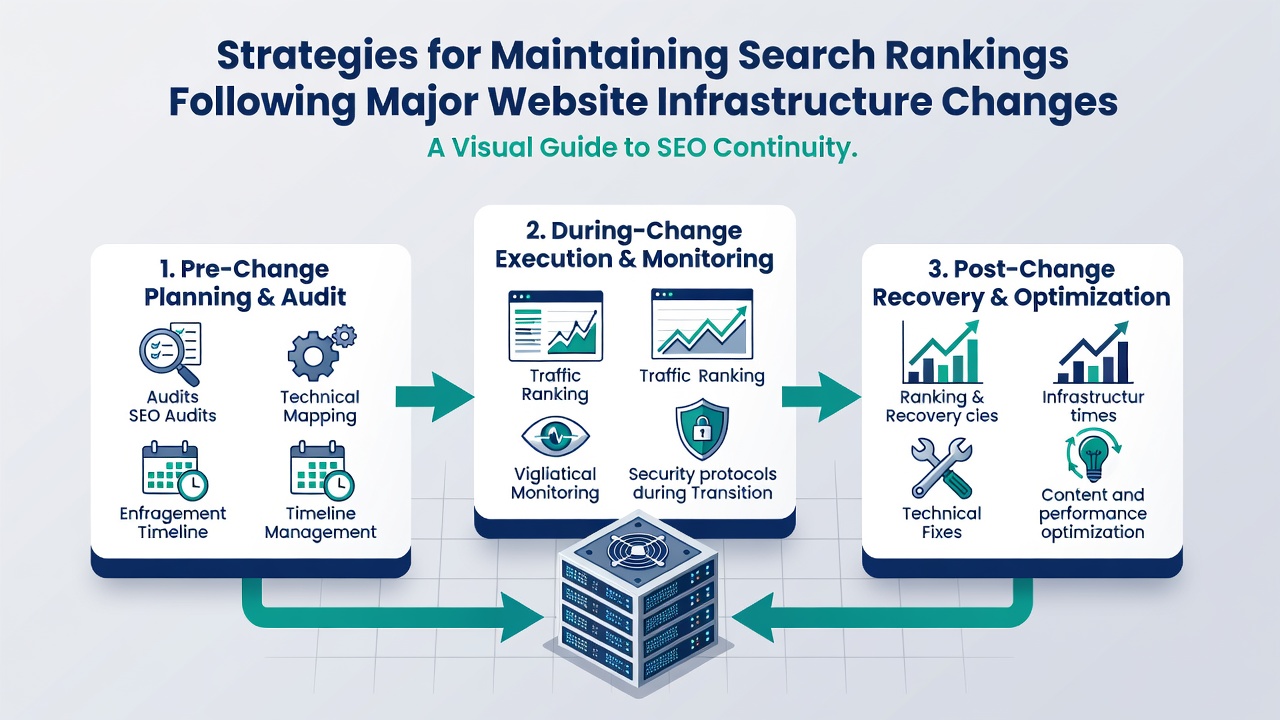
Teams typically start by auditing current site structures, mapping all URLs, and identifying high-value pages that drive the majority of organic visits. According to documentation from search engine developers, creating comprehensive inventories of existing backlinks and internal linking patterns allows for targeted preservation of authority signals during transitions. Experts recommend generating full backups of databases and server configurations well in advance, since September 2026 algorithm refinements placed greater weight on consistent site availability metrics across multiple crawl sessions. Those who studied migration cases observe that documenting crawl budgets beforehand prevents search engines from overlooking updated content once infrastructure modifications activate.
Executing Redirects and Technical Adjustments
During the actual infrastructure shift, implementation of 301 redirects stands out as a primary method for transferring ranking equity from old URLs to new ones, and studies reveal that incorrect redirect chains can dilute this value over time. Site owners often update XML sitemaps and robots.txt files immediately after changes take effect, ensuring search engine crawlers receive clear instructions on which paths remain active. One analysis of enterprise-level migrations found that simultaneous updates to canonical tags and hreflang attributes for international versions reduced indexing errors by substantial margins compared with staggered approaches. Observers note that monitoring server response codes in real time helps identify 404 errors before they accumulate and affect broader site authority.
Post-Change Monitoring and Recovery Tactics
Once the new infrastructure stabilizes, regular checks through tools like Google Search Console become essential for tracking indexing status and identifying crawl anomalies that emerge days or weeks later. Research indicates that sites submitting updated sitemaps and requesting re-indexing through official channels see faster re-evaluation of modified pages than those relying solely on natural discovery processes. Figures from industry reports show that maintaining consistent internal linking structures and updating any external references promptly supports the flow of ranking signals across the revised architecture. In cases where domain changes accompany infrastructure work, utilization of the change of address tool in search console interfaces has correlated with smoother transitions according to multiple recorded examples.
Addressing Specific Challenges in Large-Scale Projects
Major overhauls involving cloud migrations or mobile-first redesigns introduce additional variables such as shifts in page speed and structured data compatibility, and evidence suggests that pre-testing these elements on staging environments minimizes unexpected ranking fluctuations. Analysts have documented instances where failure to preserve historical URL patterns led to fragmented authority distribution, whereas proactive consolidation of duplicate content through proper canonicalization preserved overall visibility. What's interesting is how September 2026 updates emphasized user experience signals tied directly to infrastructure reliability, prompting many organizations to incorporate load testing as a standard pre-launch step. Those who've tracked recovery timelines note that combining log file analysis with ranking tracking tools provides clearer insights into how crawlers interact with revised site architectures.
Long-Term Maintenance After Stabilization
After initial recovery periods conclude, ongoing audits of backlink profiles and content freshness help sustain the gains achieved through careful migration handling. Data from academic reviews of web evolution patterns reveals that sites investing in regular performance evaluations post-infrastructure changes maintain steadier rankings compared with those adopting reactive strategies only. External references to updated content through outreach or natural mentions further reinforce authority when infrastructure modifications have altered site footprints significantly. A single relevant source on best practices appears in Google's official guidance on site moves, which outlines technical steps aligned with observed successful outcomes across diverse implementations.
Conclusion
Overall patterns from documented migrations demonstrate that combining thorough pre-planning, precise technical execution, and diligent post-change oversight forms the foundation for preserving search rankings amid infrastructure shifts. Organizations applying these layered methods consistently report shorter recovery windows and reduced volatility in organic performance metrics. Continued attention to evolving search engine expectations, including those highlighted around September 2026, supports sustained visibility when infrastructure evolves over time.