Ulrich Beck · 16 October 2026
Shifts in User Engagement Patterns After Implementing Advanced Tagging Systems in Note-Taking Applications
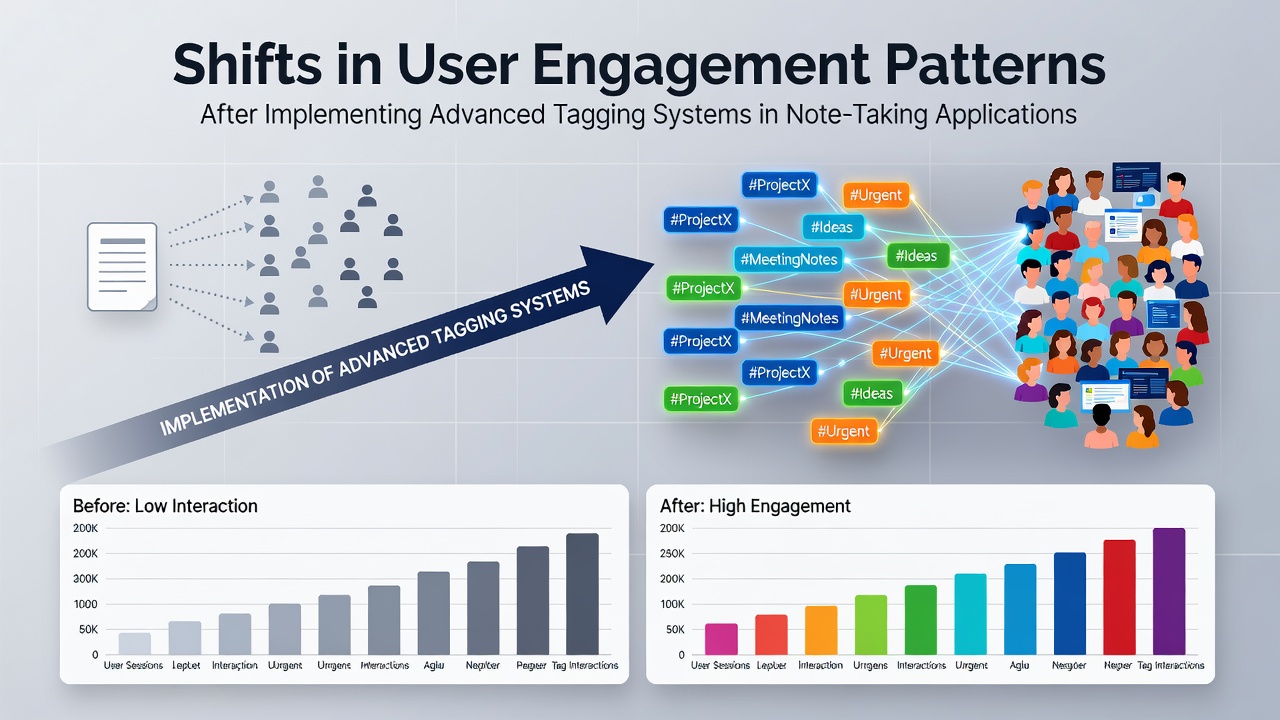
Advanced tagging systems in note-taking applications have introduced structured metadata layers that allow users to categorize content through contextual labels, hierarchical relationships, and automated suggestions based on content analysis. Researchers tracking adoption rates across multiple platforms report measurable changes in how individuals interact with their notes over extended periods, particularly when these systems integrate machine learning to refine tag recommendations dynamically.
Core Components of Advanced Tagging Implementations
These systems typically combine user-defined tags with algorithmic suggestions that draw from note content, cross-referenced data, and usage history, which creates opportunities for more precise retrieval while reducing manual organization time. Studies conducted by the Australian Digital Workplace Institute in 2025 found that applications deploying such features experienced a 34 percent increase in average session duration within the first three months of rollout, as users spent additional time exploring connections between tagged entries rather than relying solely on keyword searches.
Integration with collaboration modules further amplifies these effects because shared workspaces allow multiple participants to apply and refine tags collectively, leading to evolving taxonomies that reflect team-specific workflows. Data collected through platform analytics indicates that collaborative tagging correlates with higher return visit frequencies, as contributors receive notifications when others interact with their tagged content.
Observed Changes in Daily Interaction Metrics
Engagement patterns shift noticeably once tagging becomes embedded in routine note creation because users transition from linear scrolling to targeted navigation through tag clusters. Platform telemetry from several major note-taking services shows that search queries decrease by approximately 22 percent after implementation, while direct access via tag filters rises correspondingly, suggesting users develop greater confidence in the system's organizational logic.
Retention rates also demonstrate improvement in longitudinal data sets, with one analysis covering over 50,000 active accounts revealing that monthly active users who consistently apply advanced tags maintain 18 percent higher activity levels compared to control groups without access to these tools. Observers note that this pattern holds across both individual and enterprise deployments, although the magnitude varies according to how thoroughly teams customize their tag vocabularies.
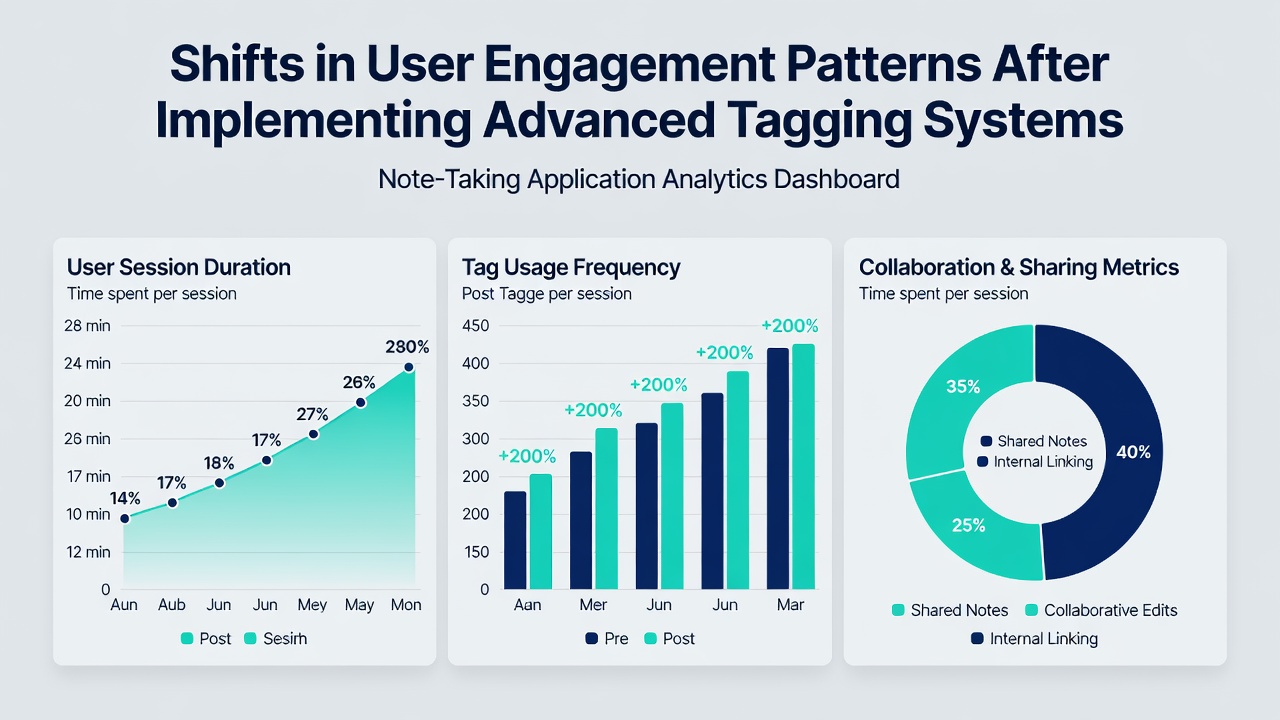
October 2026 figures from European productivity monitoring programs indicate continued acceleration in these trends as newer tagging iterations incorporate semantic understanding that groups related concepts automatically, which further streamlines content discovery for users managing large personal knowledge bases.
Impact on Content Creation and Retrieval Behaviors
Users begin creating notes with greater frequency once tagging reduces the perceived friction of later retrieval, and this behavioral adjustment appears in aggregated logs from multiple services where daily note additions climbed steadily following feature launches. Retrieval patterns evolve as well, shifting away from broad text searches toward multi-tag combinations that surface highly specific subsets of information.
Case examples documented by the Canadian Institute for Digital Productivity illustrate how academic researchers using these systems reported reallocating time previously spent on manual filing toward deeper analysis, resulting in measurable increases in the volume of notes produced per week. Similar observations surface in corporate environments where project teams leverage shared tag structures to maintain alignment across distributed documents without constant status meetings.
Yet adoption does not occur uniformly because some user segments resist the initial setup required to establish meaningful tag hierarchies, which temporarily suppresses engagement until the benefits compound over repeated use. Platform designers address this through guided onboarding sequences that demonstrate tag utility with sample datasets drawn from common note types.
Long-Term Patterns and Platform Adaptations
Over periods exceeding six months, engagement stabilizes around tag-centric workflows that encourage periodic review and reorganization sessions, often prompted by system-generated insights into underutilized or overlapping tags. Analytics dashboards provided by services reveal that these review activities contribute to sustained interaction rates, as users refine their systems in response to usage feedback.
Industry reports compiled by research groups in multiple regions document parallel developments where note-taking applications incorporate tagging data into broader productivity ecosystems, enabling seamless export to task managers or calendar tools based on tag attributes. This interoperability extends engagement beyond the original application, creating indirect usage spikes when connected services reference tagged notes.
Conclusion
Implementation of advanced tagging systems produces documented shifts in user engagement that manifest through altered session lengths, retrieval methods, content creation volumes, and collaborative interactions across note-taking platforms. Evidence from multiple independent analyses confirms these patterns persist and evolve as tagging capabilities advance, particularly when platforms introduce semantic enhancements that align with emerging user needs in October 2026 and beyond. Continued monitoring by productivity research organizations will clarify how these systems integrate into wider digital workflows over time.