Yves Neumann · 17 October 2026
How API Integrations Enhance Connectivity Between Note Platforms and External Project Management Tools
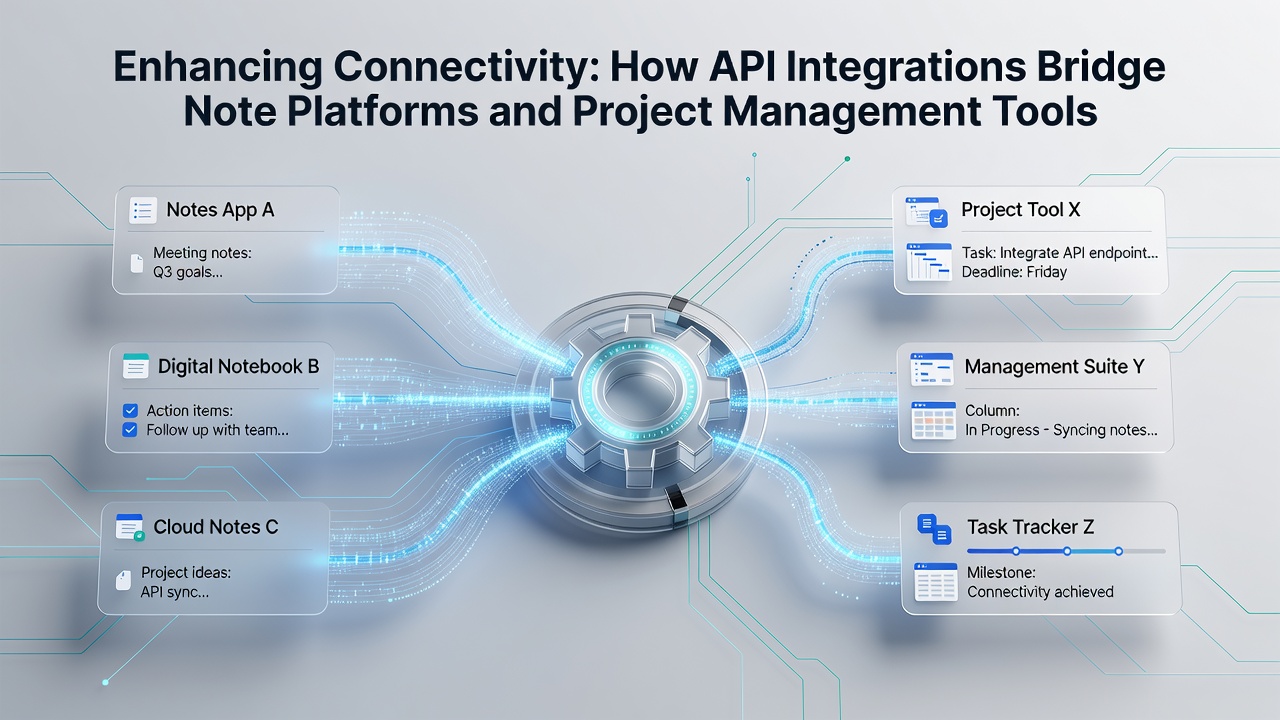
API integrations allow note platforms to exchange structured data with project management tools in real time, enabling teams to link meeting notes directly to task lists, timelines, and resource allocations without manual copying or separate logins. Developers build these connections through standardized endpoints that handle authentication, data formatting, and synchronization rules, which reduces duplication across systems that otherwise operate in isolation.
Core Mechanisms of API-Driven Connections
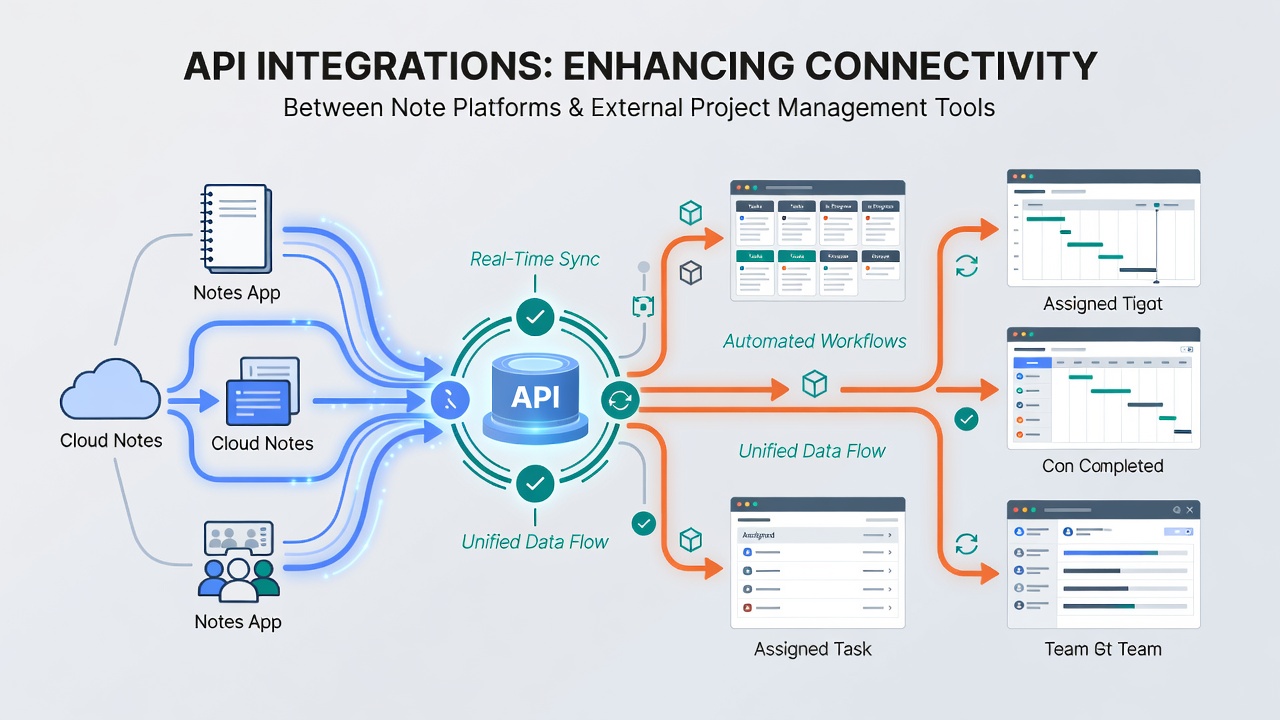
Note platforms expose endpoints for creating, updating, and retrieving entries while project tools accept payloads that map note content to specific tasks or milestones. When a user tags a note with a project identifier, the API triggers an automatic push that populates corresponding fields in the external system, and any status change in the project tool can trigger a webhook back to the note platform. This bidirectional flow relies on OAuth protocols for secure authorization and JSON schemas that maintain consistent field mapping across different vendors.
Practical Data Flows in Daily Operations
Teams working across distributed environments often maintain meeting summaries in one application and track deliverables in another. API connections let a completed action item in the project tool update the linked note entry automatically, while new annotations added during review sessions appear as comments or attachments in the management interface. Observers note that such linkages cut down on version conflicts because both systems reference a single source of truth rather than divergent copies.
Security and Compliance Considerations
Data exchanged through these APIs must comply with encryption standards during transit and at rest. Organizations implement role-based access controls so that only authorized users can trigger sync operations or view cross-platform content. Reports from government agencies in Australia highlight how standardized API security frameworks reduce exposure risks when productivity applications connect to third-party services.
Research from academic institutions in Canada demonstrates measurable reductions in time spent on administrative updates when APIs handle routine synchronization. The studies track metrics such as task completion rates and note-to-deliverable linkage accuracy across multiple departments over six-month periods, showing consistent patterns in organizations that maintain active integrations.
Industry Adoption Patterns Through Late 2026
By October 2026 many enterprise deployments had incorporated API rate limiting and retry logic to handle peak usage periods without service interruptions. Integration logs reveal that organizations running hybrid setups across multiple cloud regions rely on these controls to maintain stable connectivity even when one platform experiences temporary latency. Industry reports document increased use of event-driven architectures that push updates only when relevant fields change, rather than relying on scheduled bulk transfers.
One documented case involved a research group that connected its internal note repository to an external planning platform used for grant timelines. The API layer mapped specific note sections to milestone deadlines, allowing budget adjustments entered in the project tool to appear automatically in the corresponding research notes. Such implementations illustrate how targeted field mapping supports specialized workflows without requiring custom development for every data point.
Standards and Interoperability Efforts
Industry groups continue to refine common data models that simplify integration between note and project systems. These efforts focus on consistent vocabulary for elements like due dates, assignees, and priority levels so that mappings remain reliable across vendor updates. Organizations adopting these emerging standards report fewer maintenance issues when one connected platform releases new features.
European Union documentation on digital interoperability emphasizes the role of open API specifications in supporting cross-border collaboration tools. The guidelines encourage use of machine-readable documentation and consistent error handling, which helps developers maintain integrations that function across different regulatory environments.
Conclusion
API integrations create reliable pathways that keep note content and project data aligned across separate platforms. Through standardized endpoints, secure authorization methods, and event-driven updates, these connections support operational continuity while meeting compliance requirements. Continued refinement of data models and security practices sustains these linkages as both note platforms and project management tools evolve.